Action RPG · Popular
Path of Exile 2
A Path of Exile 2 campaign route should reduce dead travel without pretending every map has one permanent layout. The strongest plan tracks objectives, waypoints, valuable side rewards, resistance and gear checks, and a clean rule for when to stop farming and move forward.
Begin with the campaign route guide. Then use the progression map, gear priorities, boss checkpoint, and recovery notes below whenever the campaign starts to feel slow or directionless.

Guide library
Choose the problem you are solving
5 connected route and planning sections.
Campaign route guide
Objective order, waypoints, valuable detours, boss checks, and co-op regrouping.
Open guide →02Act progression map
Use objectives and permanent rewards as anchors when layouts vary.
Open guide →03Gear and currency priorities
Fix the slot or defense currently blocking progress instead of crafting randomly.
Open guide →04Boss checkpoint
Check defenses, sustain, flask plan, and the skill loop before repeating attempts.
Open guide →05Recover a stalled build
Identify whether the wall is damage, defense, sustain, links, or execution.
Open guide →Progression map
A route that stays flexible
Use phases as decision gates, not a rigid speedrun.
Anchor the act
Identify the next required objective, nearby waypoint, and any permanent side reward worth the detour.
Maintain the build
Upgrade the main skill loop, movement, defenses, and flask sustain before adding luxury interactions.
Batch side routes
Complete valuable nearby objectives together instead of crossing an act repeatedly for isolated markers.
Leave farming on time
Farm only until a named weakness is fixed, then resume progression while rewards still improve.
Resource and build priorities
What deserves attention first
These priorities keep the route moving when options multiply.
Main skill loop
Damage, links or supports, resource sustain, and positioning must work together.
Elemental defense
Resistance gaps often explain sudden campaign walls more clearly than level alone.
Movement
A reliable movement option improves both survival and route speed.
Useful currency
Spend to solve current progression rather than hoarding every tool for a distant build.
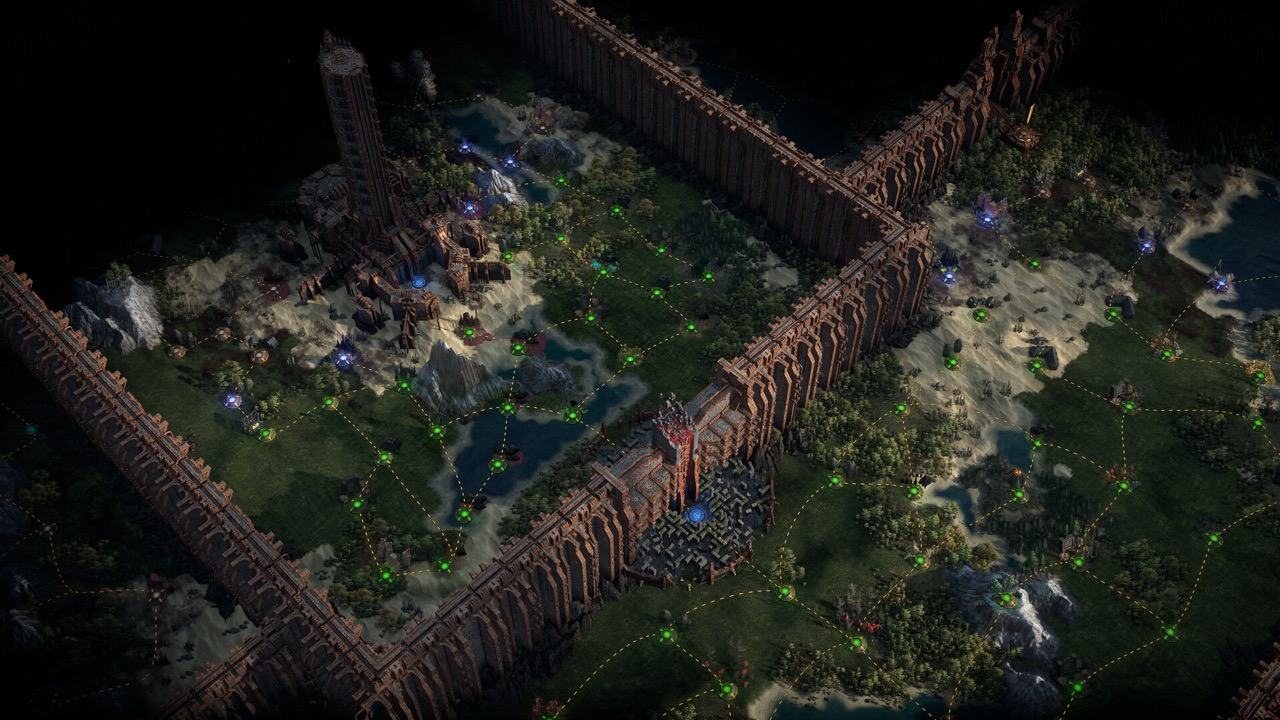
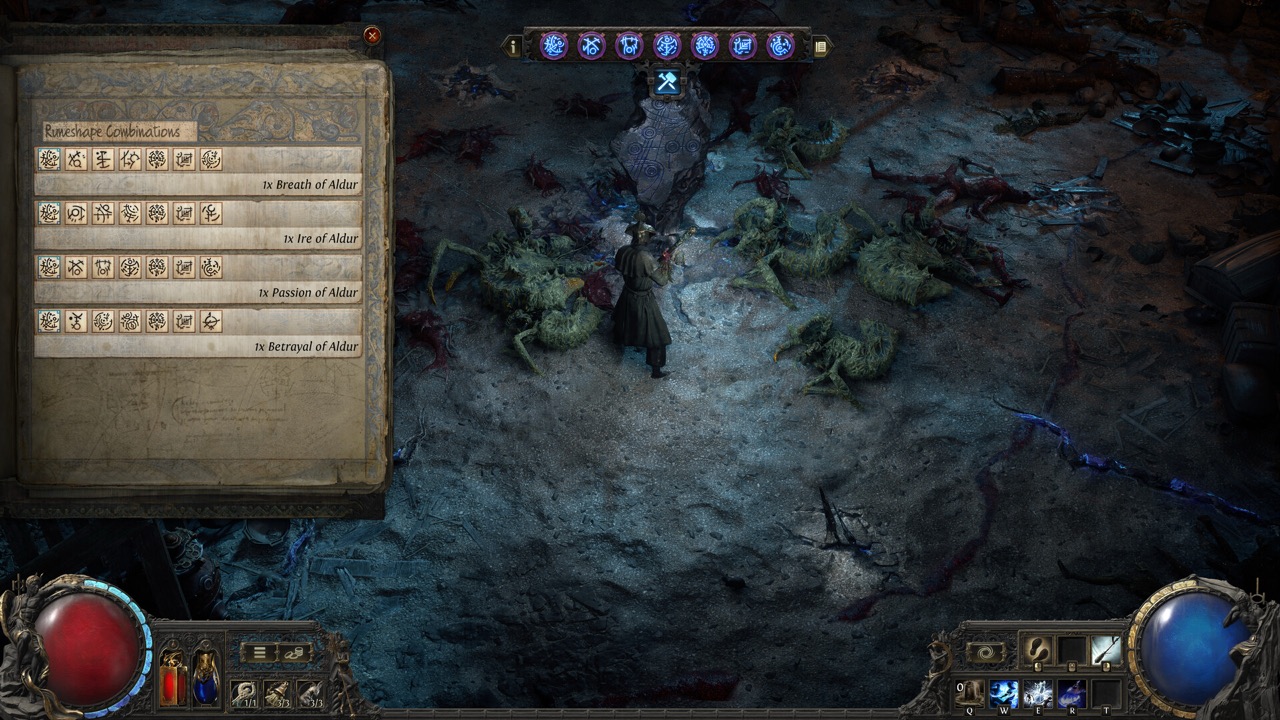
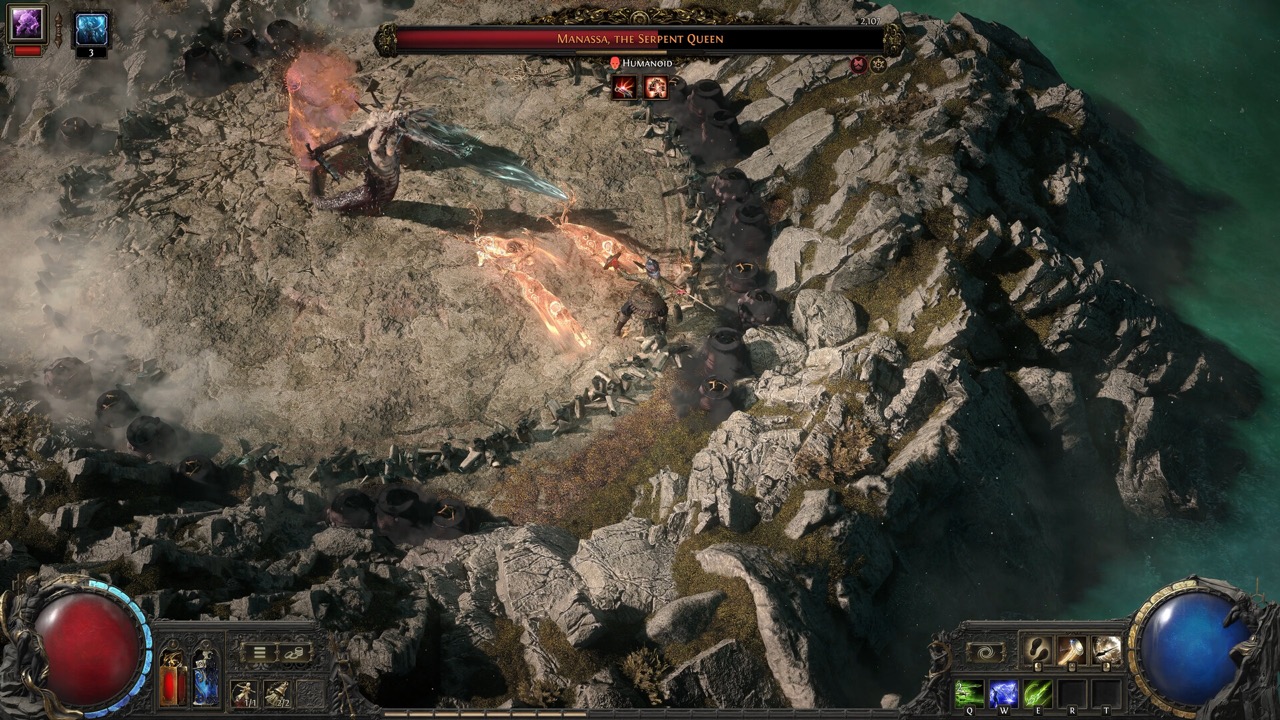
Official game media
See the route before you plan it
Publisher-provided Steam screenshots, used for visual reference.
Checkpoint
Before the next risky step
Review access, survival, recovery, and the exact reward you expect.
Troubleshooting
Common walls and route corrections
Do not repeat the same line when the problem has changed.
A boss feels impossible
Name the failure: incoming damage, uptime, sustain, mechanic recognition, or recovery.
Maps take too long
Skip low-value edges once the objective and useful side reward are understood.
Inventory interrupts every zone
Use a strict pickup rule tied to upgrades, currency, sockets, or sale value.
Co-op keeps separating
Choose regroup points at waypoints, entrances, and boss doors.